
Download PDF
  • Restasis
  • Zytaze
  • Ocuscrub
  • Stryker CMF
  • Xeomin
  • Medpor
  • Bausch & Lomb Instrum
  • Quest Medical
  • IOP
  • FCI-Ophthalmics
Bhupendra Patel, MD
Procedures

How Does Botulinum Work?

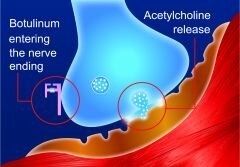
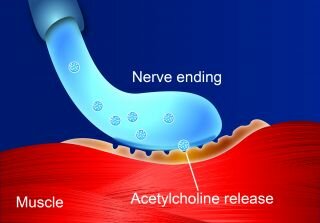
  • Normally your brain sends electrical messages to your muscles so that they can contract and move. The electrical message is transmitted to the muscle by a substance called acetylcholine.
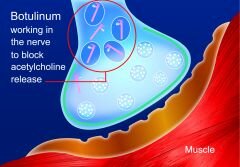
  • Botulinum works to block the release of acetylcholine and, as a result, the muscle doesn't receive the message to contract.
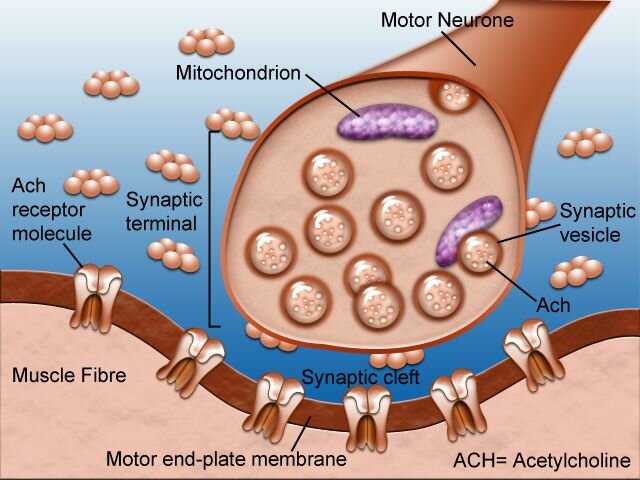


  • This means that the muscle spasms stop or are greatly reduced after using BOTOX®, providing reliable relief from symptoms.

  • Botulinum is not a cure.
  • For many patients, however, its therapeutic effects have been dramatic - symptoms usually begin to dissipate within three to fourteen days and the effects can last for approximately three months.

What Characterizes hyperactive muscle contraction?

  • At a normal neuromuscular junction, a nerve impulse triggers the release of acetylcholine, which causes the muscle to contract. Hyperactive muscle contraction, regardless of the underlying cause, is characterized by excessive release of acetylcholine at the neuromuscular junction
  • The use of Botulinum can be effective in reducing this excessive activity.

  • Botulinum is indicated fo r the treatment of cervical dystonia in adults to decrease the severity of abnormal head position and neck pain associated with cervical dystonia.

  • Botulinum is indicated for the treatment of strabismus and blepharospasm associated with dystonia, including benign essential blepharospasm or VII nerve disorders in patients 12 years of age and above.

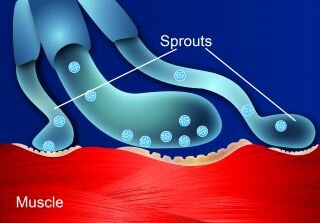
  • Botulinum blocks neuromuscular transmission through a three-step process. This is believed to be followed by the sprouting of new axon terminals, which results in the reestablishment of neuromuscular transmission.1
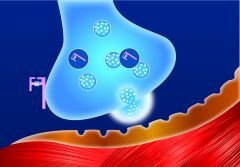
Binding
  • Botulinum Toxin Type A binds to the motor nerve terminal. The binding domain of the type A molecule appears to be the heavy chain, which is selective for cholinergic nerve terminals

Binding Illustration

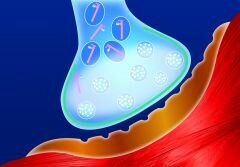
Internalization
  • Botulinum toxin type A is internalized via receptor-mediated endocytosis, a process in which the plasma membrane of the nerve cell invaginates around the toxin-receptor complex, forming a toxin-containing vesicle inside the nerve terminal.
  • After internalization, the light chain of the toxin molecule, which has been demonstrated to contain the transmission-blocking domain,5 is released into the cytoplasm of the nerve terminal.

Blocking
  • Botulinum toxin type A blocks acetylcholine release by cleaving SNAP-25, a cytoplasmic protein that is located on the cell membrane and that is required for the release of this transmitter.
  • The affected terminals are inhibited from stimulating muscle contraction.
  • The toxin does not affect the synthesis or storage of acetylcholine or the conduction of electrical signals along the nerve fiber.8


Nerve Sprouting
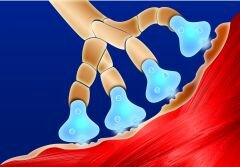
  • A nerve sprout eventually establishes a new neuromuscular junction, and muscle activity gradually returns.
  • However, new research suggests that this new nerve sprout retracts and the original junction returns to functionality.
  • In either case, repeat injections of Botulinum Purified Neurotoxin Complex may be required to maintain the desired clinical effect.
 

Learn about Xeomin Botulinum