

Overview of Botulinum
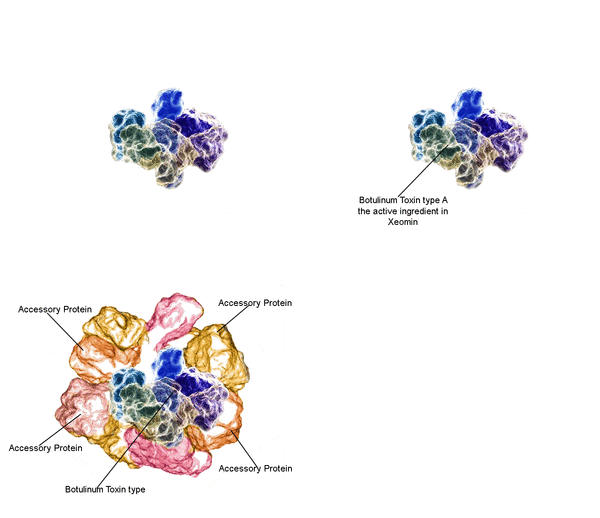
What is botulinum toxin A?
-
It is a toxin produced by the bacteria Clostridium botulinum which weakens muscles by blocking nerve impulses transmitted from the nerve endings of the muscles.
Is botulinum toxin A safe?
- Botulinum toxin is an approved treatment for Blepharopspasm and hemifacial spasm.
- Long-term follow-up studies have shown it to be a very safe and effective treatment, with up to 90 percent of patients obtaining almost complete relief of their Blepharopspasm.
- Side effects include Ptosis, blurred vision, and double vision (diplopia), Lagophthalmos, ectropion, sagging of the mouth, brow droop, epiphora.
How is botulinum toxin A used for THERAPEUTIC USES
- It is used to treat Blepharopspasm (Blepharospam refers eyelid muscles around the eye which close involuntarily. This may cause loss of vision, especially while reading, headaches, and eyebrow strain. The early symptoms of blepharospasm include increased blink rate (77%), eyelid spasms (66%), eye irritation (55%), midfacial or lower facial spasm (59%), brow spasm (24%), and eyelid tic (22%) with injection of tiny doses of botulinum toxin several sites above and below the eyes.
- The sites of the injection will vary slightly from patient to patient and according to physician preference.
- The injection is usually given on the eyelid, the brow, and the muscles under the lower lid. The injections are carried out with a very fine needle
How long does it take to work?
- Benefits begin in 1 - 14 days after the treatment and last for an average of three to four months.
Terms:
-
Blepharopspasm: It refers eyelid muscles around the eye which close involuntarily. This may cause loss of vision, especially while reading, headaches, and eyebrow strain. The early symptoms of blepharospasm include increased blink rate (77%), eyelid spasms (66%), eye irritation (55%), midfacial or lower facial spasm (59%), brow spasm (24%), and eyelid tic (22%) .
-
Ptosis: Ptosis is also known as Blepharoptosis. It refers to an eyelid which is droopy. This may cause a loss of vision, especially while reading, headaches, and eyebrow strain.
-
Lagophthalmos: Patients with lagophthalmos have an inability to close eyelids. This may occur, for instance, in patients with Thyroid eye disease. Visit the lagophthalmos page for more details.
-
Ectropion: Ectropion is when the eyelid turns out. Visit the Lid Malposition page for more details.
Epiphora: Patients with epiphora complain of watery eyes; it is when there is an imabance between production and drainage of tears. Visit the LACRIMAL page for more details.



