
| Repair of Ptosis |
Removal of Excess Skin |
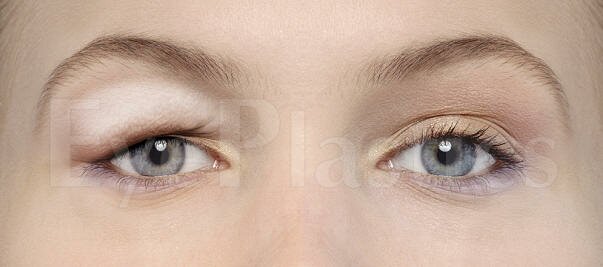
- Ptosis (Ptosis is also known as Blepharoptosis. It refers to an eyelid which is droopy. This may cause a loss of vision, especially while reading, headaches, and eyebrow strain.
- Surgery involves elevating the eyelid itself, either by a skin incision or from the back of the eyelid
|
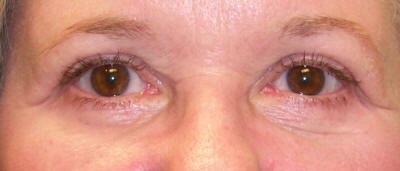
- Pseudoptosis refers to the situation when excess skin causes a hooding, or blinders effect, limiting the peripheral visual field.
- Surgery is called a Blepharoplasty
- Surgery involves removing excess skin and fat from the eyelid
|
 |
 |
Repair the one or both of the eyelid muscles that has weakened resulting in a ptotic eyelid.
- Ptosis can be corrected via several different techniques.
- Repair of a droopy eyelid can be performed via an eyelid crease incision or from the inside of the eyelid (no skin incision), or if severe, via alternate suspension techniques
- Repair of ptosis & blepharoplasty are often performed at the same time.
|
Your droopy upper eyelids and droopy brows may give you the appearance of being sleepy, tired and aging prematurely
- In addition, this sagging, may lead to brow/eyelid strain
- Eyelid surgery to improve the appearance of the eyelids is often called 'eyelift' or 'blepharoplasty'.
- This surgery can be performed on both the UPPER and on the LOWER eyelids.
|
 |
 |
 |
 |
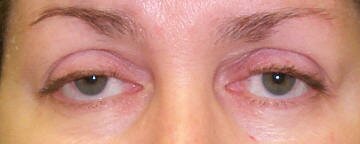
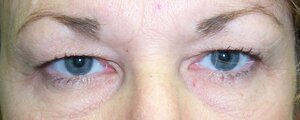
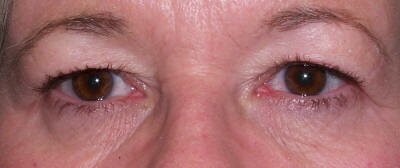
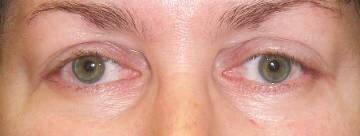
- In the pre-operative photograph above, take note that there appears to be little, if any excess upper eyelid skin.
- Rather, the patient's superior visual field is limited by the position of the eyelid since it partially obstructs the pupil.
- The normal position of the upper eyelid is midway between superior limbus and the upper pupillary margin.
- When the edge of the upper eyelid falls, it may block the upper field of your vision
|
- Removal of upper eyelid excess skin and fat (often cosmetic in nature and not covered by insurance).
- This is often called Pseudoptosis and is repaired by Blepharoplasty
- Repair of ptosis & blepharoplasty may be performed at the same time.
|
| |
|